
Preparing to bring a new kitten home means looking for new kitten things! Here’s a shopping list for you, including some essential and nice-to-have items. Have fun!
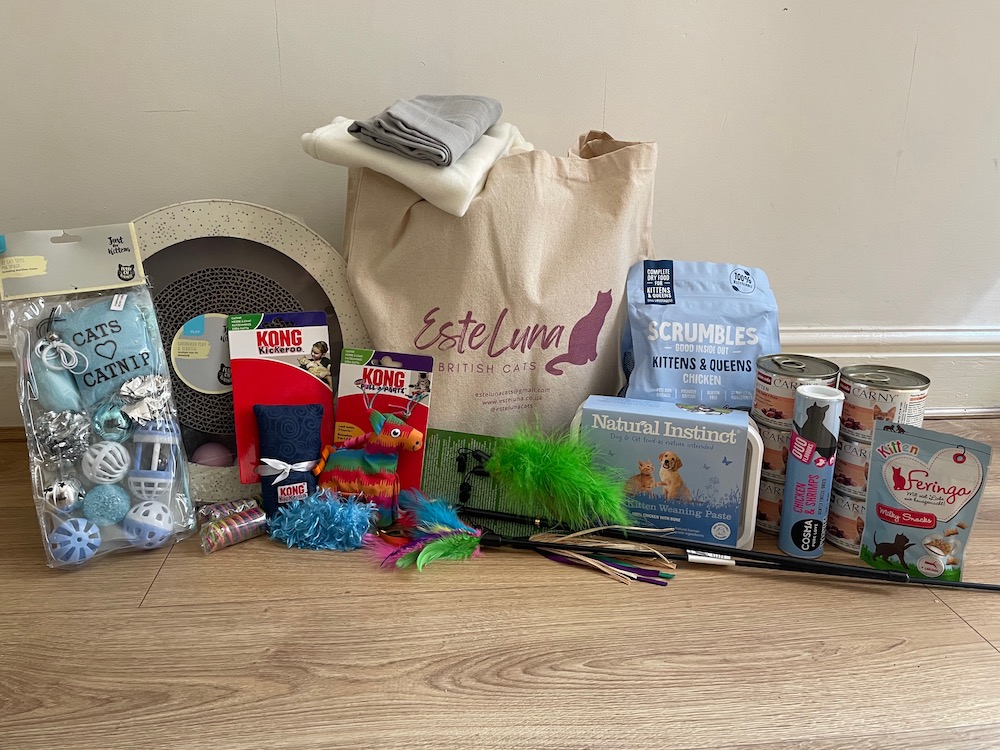
Must have:
- Food the kitten is used to, i.e. whatever the breeder was using. You can switch the kitten to a different food over time, but it has to be done slowly. For more on this subject, see our Cat Nutrition Made Simple article
- Food and water bowls. Look for ones that are quite flat/ without high edges, to avoid whisker fatigue. Ceramic or stainless steal is best, we quite like ones made of bamboo as well
- Litter tray, scoop, and litter the kitten is used to. You can change litter over time. I find that the transition from pellet to more “sandy” type of litter isn’t an issue for the majority of cats, they jump in quite happily. Swapping the other way around might take a bit more time. Avoid clay-based clumping litters as they can cause blockages if ingested
- Cat carrier – I like fabric ones that open on the side, as it makes it very easy to get the cat in and out, they can be fully unzipped at the vets, are easy to get around with, and can also double as a comfortable bed
- Sturdy cat tree – investing in a good cat tree that will last years is always a good idea, rather than having to replace it every few months. Brits are a big breed, so need something that won’t wobble. Make sure you consider the placement of the tree as well. If you put it in a far corner of the room where humans rarely hang out and with nothing interesting to look at, it’s unlikely that your cat will use it! Instead, put it next to a window, and somewhere where the family spends a lot of time
- Sturdy scratchers, ideally both vertical and horizontal. Again, placement is important. If you are worried about your sofa, make sure there’s a scratcher nearby so the cat has suitable options
- Grooming tools – for shorthairs: slicker brush, comb and zoom-groom. For longhairs: slicker brush, comb with rotating teeth and small scissors in case of mats. Don’t forget nail clippers! That’s all you need.
- Toys – little balls, wand toys, tunnels etc. are always a hit with kittens. Wand toys are very important for interactive play, so try to get a good selection. I’d especially recommend Purrsuit and Da Bird – they’ll get even the laziest cat running (not that it’s an issue with kittens). There is a trick to suitable play and I’ll probably write an article about it later – but the bottom line is, play is meant to imitate hunting behaviour in a cat. Don’t wave that wand toy in front of your cat’s face, make it “behave” as if it was a bird or a mouse – that’s the gist of it!
Could be useful:
- A bucket you can put next to the litter tray for “waste” (poop etc), as it shouldn’t be flushed! Nappy bins can work well, and help to contain any smells
- Cat bed – a lot of felines won’t be bothered about a bed, they’ll just sleep wherever. That said, it can be nice especially during those cold winter months, but once again, placement will play a role. Leaving a cat carrier out so it doubles as a bed/ safe space is always a good idea too!
- Feliway or Pet Remedy – it can help the kitten settle in the new home. Feliway is pheromone-based, Pet Remedy is a mix of safe essential oils (some people hate the smell, I personally don’t mind it). If you do decide to use either, plug it in a few days before your new addition’s arrival date.
- Food puzzle – a nice way for the kitten to have some fun and work for their treats, especially if you’re off to work and won’t be around for a while!
- Cat-safe wet wipes and kitten shampoo – may come handy especially with longhair kittens, in case they have an upset tummy and need to be cleaned up (I wouldn’t bother with shampoo for shorthairs)
- Dental hygiene accessories – it’s a good idea to stay on top of it. If you do decide to brush your kitten’s teeth, be mindful of the time when they’re teething as their gums might be sore and you want to avoid causing pain by brushing. The only set that I would recommend is made by Virbac (search google for: Virbac Enzymatic Toothpaste Kit – Fish Flavour). There are also some water additives that can help with upkeep.
- Harness – if you want to take your kitten outside, a harness will come in handy. Read our How to Harness Train Your Cat article first!
- Electronic toys – a spinning butterfly is a hit here, just mind that these toys should be used under supervision, and that they will not replace actual interactive play with wand toys. Also be mindful of toys where there’s a potential for paws and claws to get stuck, that can be dangerous
- Baby gates/ door net/ play pen/ crate – if you are integrating a new kitten into a house with resident cats or dogs, you need to prepare. Space management is a huge part of that preparation. For more, read our Basics of Cat Introductions and Basics of Cat & Dog Introductions articles
Not that necessary:
- Litter tray liners – they rip and cause more mess than they are worth. Litter tray hygiene is important, but tray liners won’t help with that. Just keep on top of scooping, and clean the tray with a bleach solution (we do it at least once a week, sometimes more, but a lot will depend on the number of cats in the household)
- Laser pen – many people love this toy, but it really isn’t great for cats. Imagine running after something that you can’t catch, no matter what you do – how annoying would that be? Rather than help our cats calm down, laser pens often cause more frustration. If you really want to use it, make sure that the play session ends with the cat having a chance to actually catch something. Even better – just stick to wand toys!
- Kitten milk – the average kitten will start weaning off mum’s milk at 5-6 weeks old, so there is no need for any milk replacements once they leave the breeder. You can get “kitten milk” in some stores, it is a treat and should be viewed as such. Mind not to give your kitten cow milk – cats are lactose intolerant!
- Water fountain – I have one and love it, but it’s definitely not a necessity if your cat is provided with a good quality diet and eats mainly wet or raw food. As mentioned previously in our Cat Nutrition Made Simple article, cats on dry food only can’t make up for the lack of moisture in food by drinking water, no matter what. Also, mind that water fountains need to be thoroughly cleaned, from my experience at least once a week
- Collar – the only time I’d say it’s appropriate for an indoor cat to wear a collar is for photos (we are partial to some cute bow ties too!) or if you have guests around/ a lot of people coming and going, and are worried that your cat may slip out the door. If worn full time, they can also leave nasty imprints on the neck area (the fur ends up visibly flatter) which isn’t a good look
- Bells on the collar – just imagine walking around with something ringing next to your ear every time to move, how annoying and frustrating would that be? I know some people use them to find their kitten more easily – but if they’re asleep under your bed, the bell is useless anyway! So just ditch it, you’ll figure out your cat’s favourite hiding spots soon enough
That’s it, I hope this is helpful!
Did I forget about something that you would consider essential? Drop me a message if so!
 EsteLuna British Cats