
I still remember when I started researching various foods ahead of bringing my first kitten, Harry, home. Between marketing claims, colourful packaging, varying information found on Facebook groups and forums, and even vets, it was really difficult to decide on what’s best.
In this article, I’ll try to cover the basics, so you can make more informed decisions when it comes to your cat’s nutrition.
A lot of what we’ll talk about here derives from a good understanding of cats – where they originated from as species, how they developed, and what their “natural” behaviour is. We all know that cats are special, so let’s get started!
1. Obligate Carnivores, and why meat is important
ALL Felidae, including lion, tiger, serval, lynx, bobcat, cheetah, puma, wildcat and the domestic cat, are members of the order Carnivora. Carnivora is very telling, because it means mammals that specialise in eating flesh. Felidae in particular are obligate carnivores – this means that their bodies require nutrients found only in animal flesh.
If you decide to stop reading here, this is the important bit – cats have to eat meat to survive and live healthy and fulfilling lives. I really, really can’t overstate how important this is. A cat CANNOT be vegan or vegetarian. If your personal views mean that you can’t feed your pet meat – a cat isn’t the right pet for you. I’m sorry. There are plenty of other species that will be a better match.
Cats also don’t have certain enzymes that omnivores possess (i.e. animals that eat both plants and meat – including dogs, foxes, and humans among others!). It means that if cats are not provided with high-meat diet, they will start to break down their own muscle and organs to get necessary levels. The results won’t be pretty.
2. Carbohydrates and why you should avoid them
What are carbohydrates? In very simple terms, it’s foods rich in starch and sugar (including grains, vegetables and fruit).
We already mentioned that cats lack certain enzymes that omnivores possess. That also makes it very difficult for cats to break down and get any nutrition from carbs and high-glucose (sugary) foods.
What those high-carb and high-glucose foods do instead, is make the cat feel more hungry due to fluctuating sugar levels. Additionally, they just have to eat more to get nutrients they need. It is a quick road to obesity, not to mention a risk of diabetes in later life.
3. Water and the importance of hydration
The domestic cat that we all know and love, no matter whether a farm cat or a pedigree with countless generations of champions behind them, all originated from the same ancestor, and that’s the African Wildcat, Felis sylvestris lybica.
This wildcat is native to Africa and certain parts of Asia – this is important! The land wasn’t the easiest to deal with and there wasn’t that much water to go around. Cats adapted to get the vast majority of their water intake from prey – and that included rats, mice, hares, birds and others.
This means that cats naturally have very low thirst drive and the majority of their water intake comes from food, and that’s why feeding your feline wet or raw food is crucial.
A cat that eats dry food only simply cannot make up for low moisture in this food by drinking – they will end up constantly dehydrated, their urine will smell more strongly, and they will be more prone to UTIs and blockages.
What does it all mean when you’re choosing food for your cat? Here’s what you want to look for:
1. High meat content
Note that we are talking about meat content – NOT protein! Not all protein is created equal. Many big brands will use vegetables in their pet food to bring the % up, but cats do not benefit from plant-based protein.
Have a look at the table of contents. What you want is:
- Meat featured as the first ingredient
- Ideally, you want it to be a named meat, so for example “chicken breast” rather than “meat derivatives”
- Brand providing specific % of meat content in their list of ingredients. Look for foods with 60% meat minimum.
2. Low carbs
Again, note that we are talking about carbs, not grains! There are plenty of grain-free foods, but what many brands do is replace them with other carbs, such as rice or potatoes.
Cats don’t need carbs or vegetables. In the wild, the most they’d get is whatever was in their prey’s stomach (and it would be partially digested as well).
Carbs are just a cheap filler that pet food brands use to increase their margins – all at your cat’s expense.
3. Wet food or raw food (avoid dry!)
As we mentioned, cats eating dry food cannot make up for the lack of moisture by drinking water, no matter whether you have fancy bowls or fountains. They just can’t.
Keep in mind:
- The cheapest wet food is better for your cat than the most expensive dry food
- Use a time feeder with an ice pack if you are away during the normal meal time (eg. CatMate C200 and similar)
Does it mean that your cat shouldn’t eat dry food at all? Ideally, no they shouldn’t – but life is never black and white, and I will admit that I give dry to my cats as a treat, and also use it during cat shows. That said, it’s definitely not the main thing that they eat.
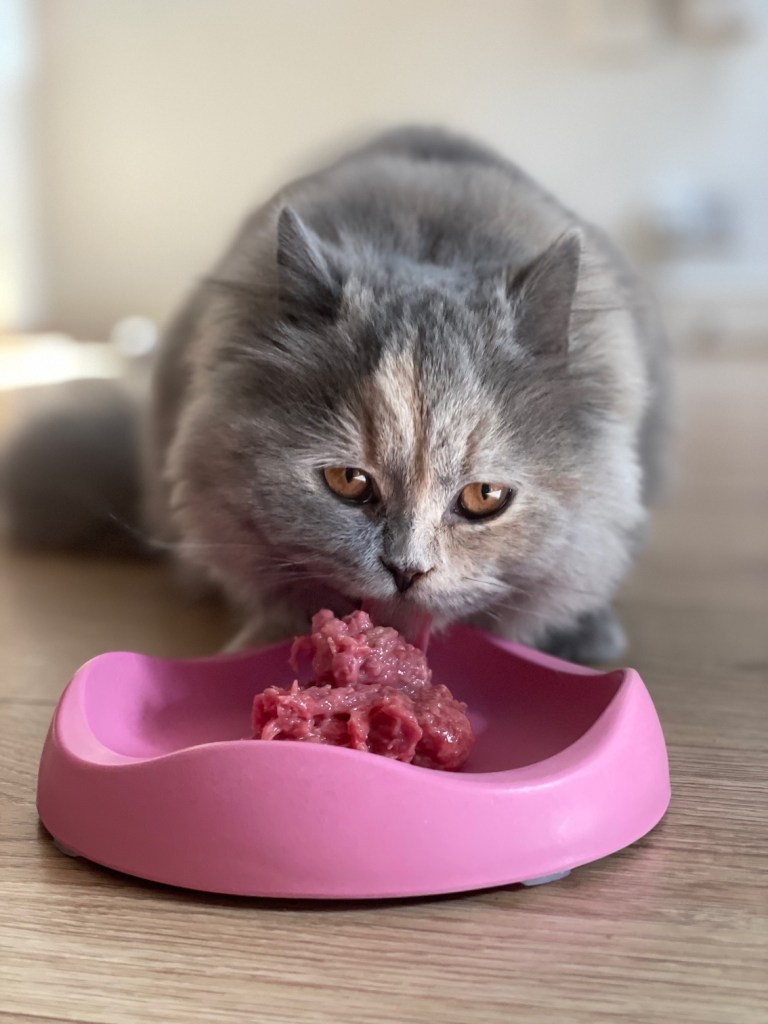
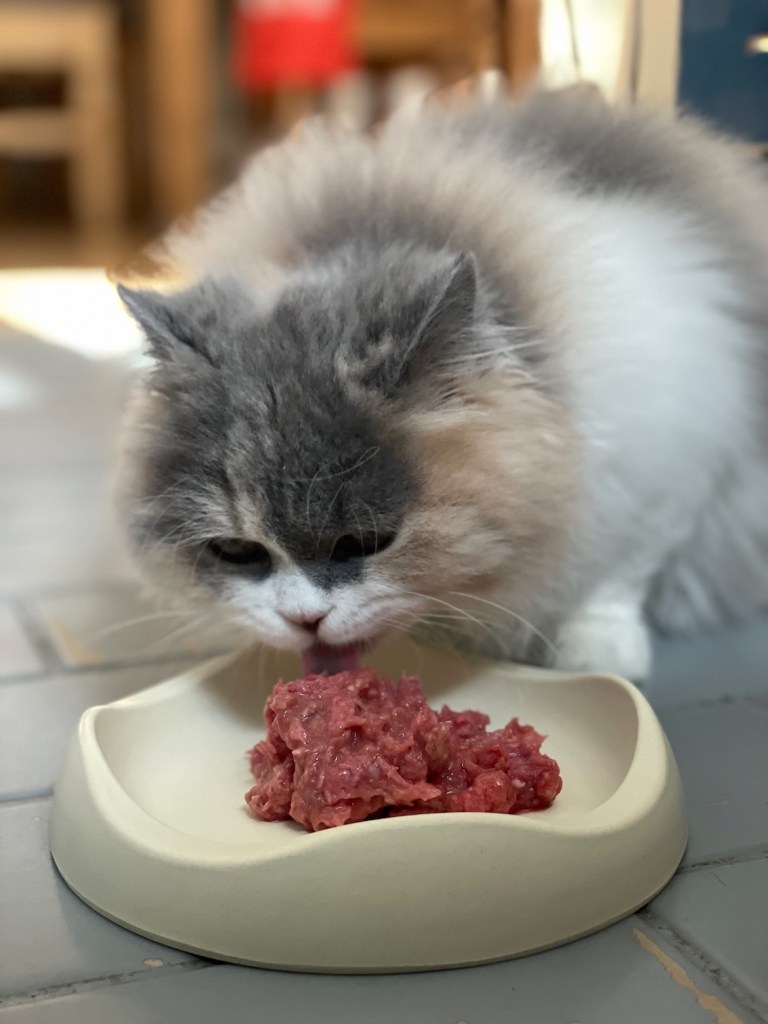
A quick note on raw food: it’s obviously the best possible option, although I realise that not everyone can or feels comfortable feeding it to their cats. That said, if you want to try raw, don’t attempt to make it unless you know what you are doing. It has to be complete with correct ratios or muscle, organ and bone. Feeding your cat unbalanced diet, even if raw, will do more harm than good. There are plenty of brands that make raw food and deliver it frozen, and it’s a good way to try it out as well. As always, make sure any new foods are introduced slowly to avoid tummy upsets.
And so we went through the main bit. This wasn’t meant to be a multi-part post, but looks like it will have to be! Next time, we’ll try to put together a cheat-sheet, tackle some common questions, and attempt to do some myth-busting too, so be on a lookout!
 EsteLuna British Cats